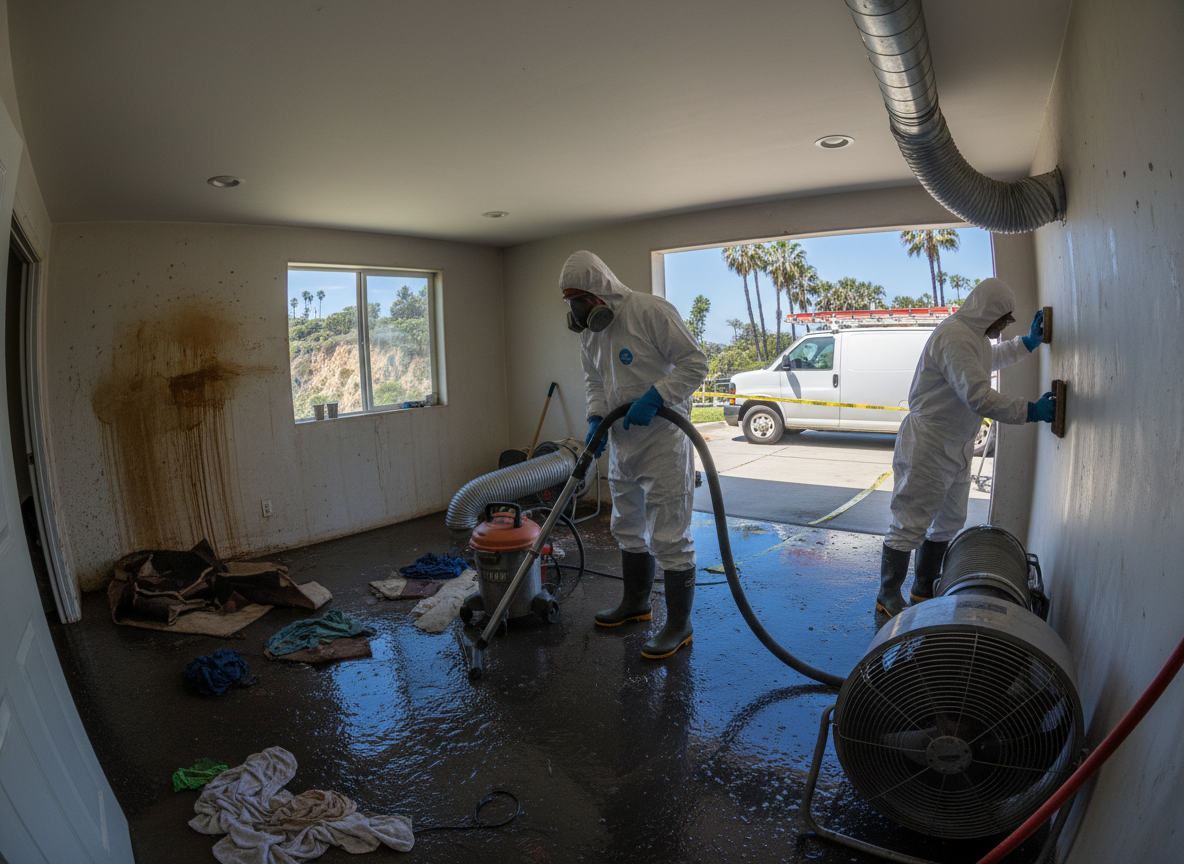
Virexind Frame handles water damage restoration in Rolling Hills Estates with crews based at 28625 S Western Avenue. The neighborhood sits on the Palos Verdes Peninsula where older ranch-style homes on sloped lots meet Pacific breezes that keep summers mild but can push moisture into crawl spaces and stucco walls after heavy winter rains. Technicians respond directly to properties along Silver Spur Road and near Dapplegray Park, extracting water before it reaches the clay-heavy soils common here.
Rolling Hills Estates borders Portuguese Bend and sits close to the Los Verdes Golf Course fairways. These locations bring unique access challenges with narrow driveways and gated entries that require smaller extraction equipment. Ocean-moderated air keeps temperatures steady, yet coastal fog can slow drying times in garages and lower levels of homes built in the 1960s and 1970s.
When pipes burst or roofs leak near Terranea Resort traffic corridors, Virexind Frame crews isolate affected rooms quickly and monitor humidity levels room by room. Service stays local, with trucks returning the same day to check progress on properties tucked against the Rolling Hills Estates border.
Around Rolling Hills Estates
We regularly work near:
- 📍Abalone Cove Shoreline Park
- 📍Portuguese Bend
- 📍Los Verdes Golf Course
- 📍Terranea Resort
- 📍Dapplegray Park
Water Damage Restoration in Rolling Hills Estates — Local Notes
- •Homes along the Portuguese Bend side often have older cast-iron plumbing that fails under hillside shifting, requiring targeted slab leak detection before full drying begins.
- •Narrow streets near Vista Verde Park limit large equipment access, so crews use portable air movers and moisture meters suited for tight lots common in Rolling Hills Estates.
- •Winter rains collect in the clay soils around Abalone Cove Shoreline Park edges, pushing groundwater toward foundations and extending drying times beyond standard timelines.
- •Stucco exteriors on homes near Los Verdes Golf Course trap moisture after ocean fog events, so technicians check wall cavities with infrared cameras before closing jobs.