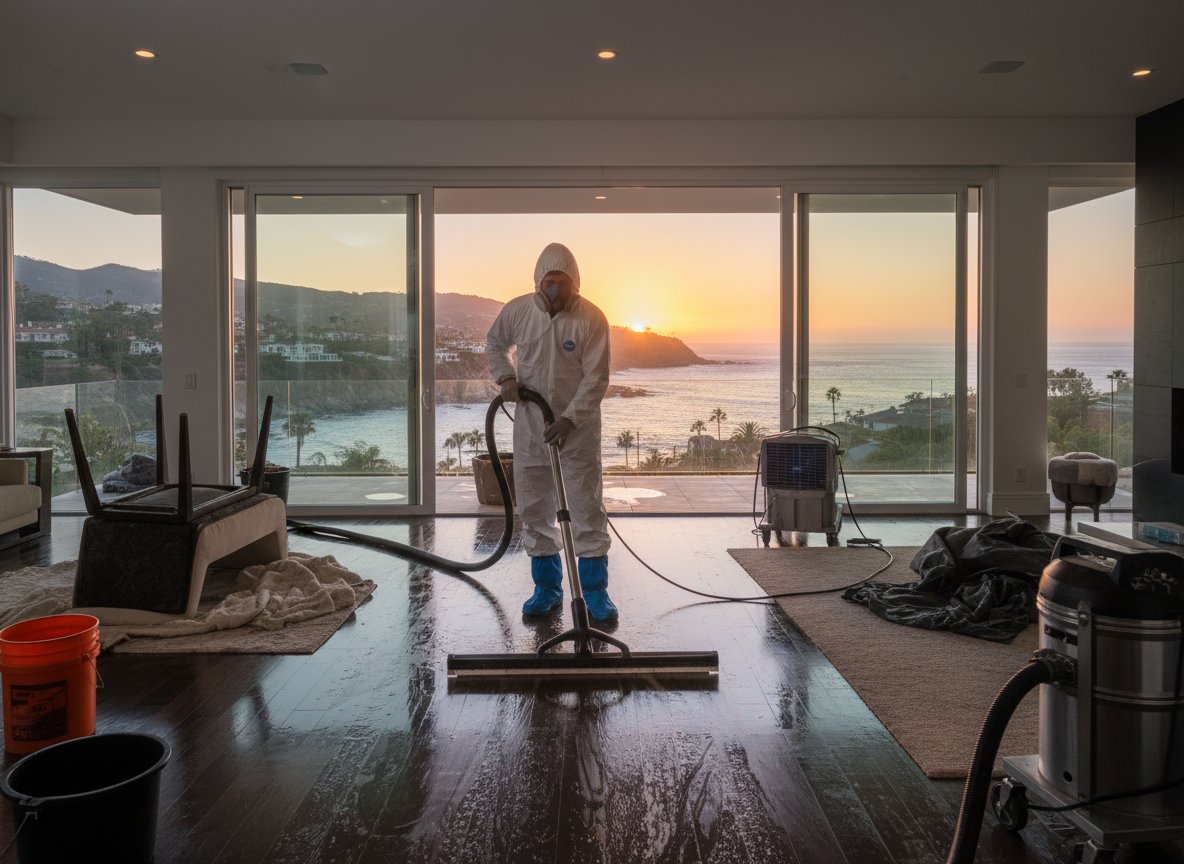
Rancho Palos Verdes sits on coastal bluffs where Pacific breezes keep daytime humidity moderate yet trap moisture inside older hillside homes built before modern vapor barriers. When a pipe bursts or a roof leak hits during the winter rainy season, water travels quickly along the clay-heavy soil and under slab foundations common in Portuguese Bend and Seaview neighborhoods. Technicians must pull baseboards early and check for hidden saturation behind plaster walls that were common in 1960s construction along the Rolling Hills Estates border.
Ocean proximity also means salt air accelerates corrosion on metal HVAC components and electrical boxes once water reaches them. In Terranea and near Los Verdes Golf Course, many single-story ranch homes have flat sections of roof that pond water after heavy Pacific storms, sending it into wall cavities. Emergency crews use moisture meters on every visit because visible puddles on tile floors often hide wet subfloors that will later buckle if left above 15 percent moisture content.
Los Angeles County building codes require permits for any structural drying that involves opening walls in homes over 50 years old, a frequent situation near Point Vicente Lighthouse and Abalone Cove. Crews document every step with photos and readings so homeowners can show insurers the exact path water took through the terraced lots typical here. Delaying extraction even 24 hours lets mold start on drywall in the mild Mediterranean temperatures that stay between 55 and 70 degrees most of the year.
Hidden Moisture Risks in Local Terrain
Steep driveways and retaining walls in Portuguese Bend direct runoff straight toward foundation vents. Crews always check crawl spaces first because the combination of ocean fog and poor grading keeps soil damp for weeks after a storm.
Technician insight
In Rancho Palos Verdes the thing that catches most people out with Emergency water cleanup is how quickly ocean moisture re-wets drywall once the equipment is pulled too soon. Hillside lots in Portuguese Bend and Seaview hold water against foundations longer than flat inland neighborhoods, so we always run an extra day of drying even when meters read dry on the surface.
Burst Supply Line in Seaview Home
A homeowner in Seaview noticed water seeping from a bathroom wall after a supply line split overnight. We found saturation running under the 1970s hardwood into the hallway and down the slope toward the garage. Extraction and targeted drying prevented mold growth in the plaster walls while preserving the original oak floors.
How it works
- 1
Arrival and Safety Shutoff
Technician arrives within the hour, locates the water source and shuts off supply or power if needed while protecting unaffected rooms with plastic barriers.
- 2
Water Extraction
Submersible pumps and wand extractors remove standing water from floors, carpets and upholstery before it migrates into wall cavities common in Rancho Palos Verdes ranch homes.
- 3
Moisture Mapping
Infrared cameras and pin meters locate hidden saturation in plaster, hardwood and concrete slabs typical along the coastal bluffs near Terranea Resort.
- 4
Drying and Monitoring
Air movers and dehumidifiers run until readings drop below 12 percent, with daily visits to adjust equipment in the mild ocean-moderated climate.
- 5
Final Clearance
Final walkthrough with homeowner confirms all affected materials are dry and ready for any needed repairs from local contractors.
Pricing
Upfront quotes after on-site inspection; final cost depends on volume of water, number of affected rooms and whether hardwood or plaster requires opening.