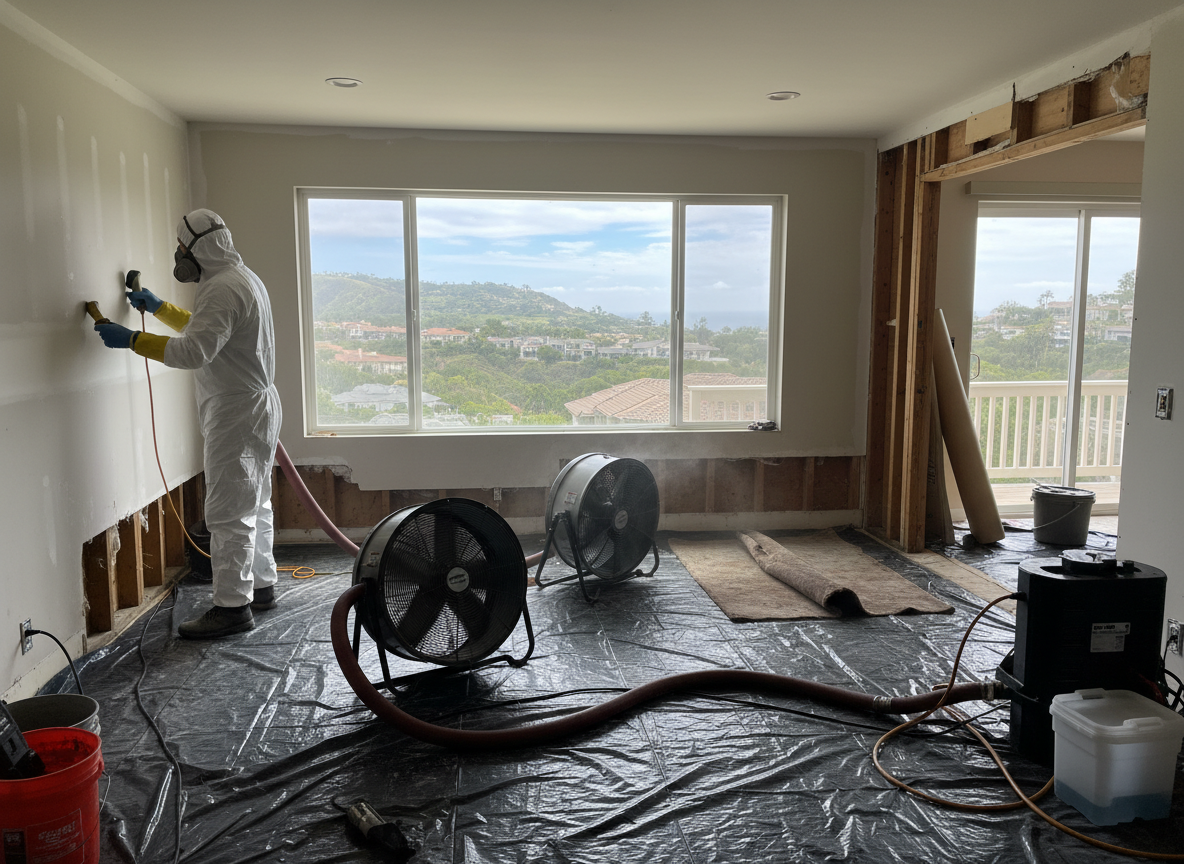
Rancho Palos Verdes sits on steep coastal slopes where mild Mediterranean weather meets frequent Pacific fog. Water from roof or plumbing leaks travels along clay soils and under concrete slabs common in homes built from the 1960s onward near the Rolling Hills Estates border. These paths often reach interior walls before residents notice staining, especially around Terranea and Seaview neighborhoods where ocean breezes slow surface drying and push moisture deeper into framing.
Los Angeles County building practices in this area require specific vapor barriers and drainage details that many older Portuguese Bend properties lack. When leaks occur near Point Vicente Lighthouse or Los Verdes Golf Course, water can pool against retaining walls and travel laterally into garages or lower levels. Technicians must map moisture with meters rather than relying on visible signs because the ocean-moderated air keeps surfaces from feeling damp even when wood moisture content remains elevated.
Hidden Moisture Pathways
Hillside lots in Rancho Palos Verdes direct runoff toward foundations during winter rains. Leaks at plumbing penetrations in slab-on-grade homes frequently migrate under tile or hardwood before surfacing near Abalone Cove Shoreline Park properties. Restoration crews remove baseboards early and use targeted drying under cabinets to prevent mold in the confined crawl spaces typical here.
Drying Challenges Near the Coast
Pacific breezes keep relative humidity higher than inland Los Angeles County locations, extending drying times for saturated drywall and insulation. Homes bordering San Pedro or Palos Verdes Estates often need dehumidifiers placed on multiple levels because single-unit setups fail to reach moisture trapped behind stucco-clad walls.
Technician insight
In Rancho Palos Verdes, the thing that catches most people out with water leak restoration is how Pacific Ocean breezes keep humidity high enough that drywall behind stucco in Portuguese Bend homes stays wet weeks longer than it would inland, so homeowners stop checking too soon and mold starts in the cavities.
Seaview Home Slab Leak
A slow supply line leak under a 1970s slab in Seaview sent water along the slope toward the garage. Meters showed elevated moisture extending six feet into the living room framing. Extraction and targeted drying under the toe-kick prevented further migration into the hillside retaining wall. The structure dried fully within nine days without additional demolition.
How it works
- 1
Initial Assessment
Technician arrives from the 28625 S Western Avenue location and documents visible water paths using moisture meters in affected rooms.
- 2
Water Source Isolation
Plumbing or roof leak is stopped and standing water is extracted before it travels further down the slope.
- 3
Drying and Monitoring
Equipment is positioned to account for ocean breezes while daily readings track moisture reduction in framing.
- 4
Restoration Completion
Materials are replaced or repaired and the site is cleared once readings confirm safe levels throughout the structure.
Pricing
Upfront quotes issued after on-site inspection; final cost depends on extent of hidden moisture and number of levels affected.