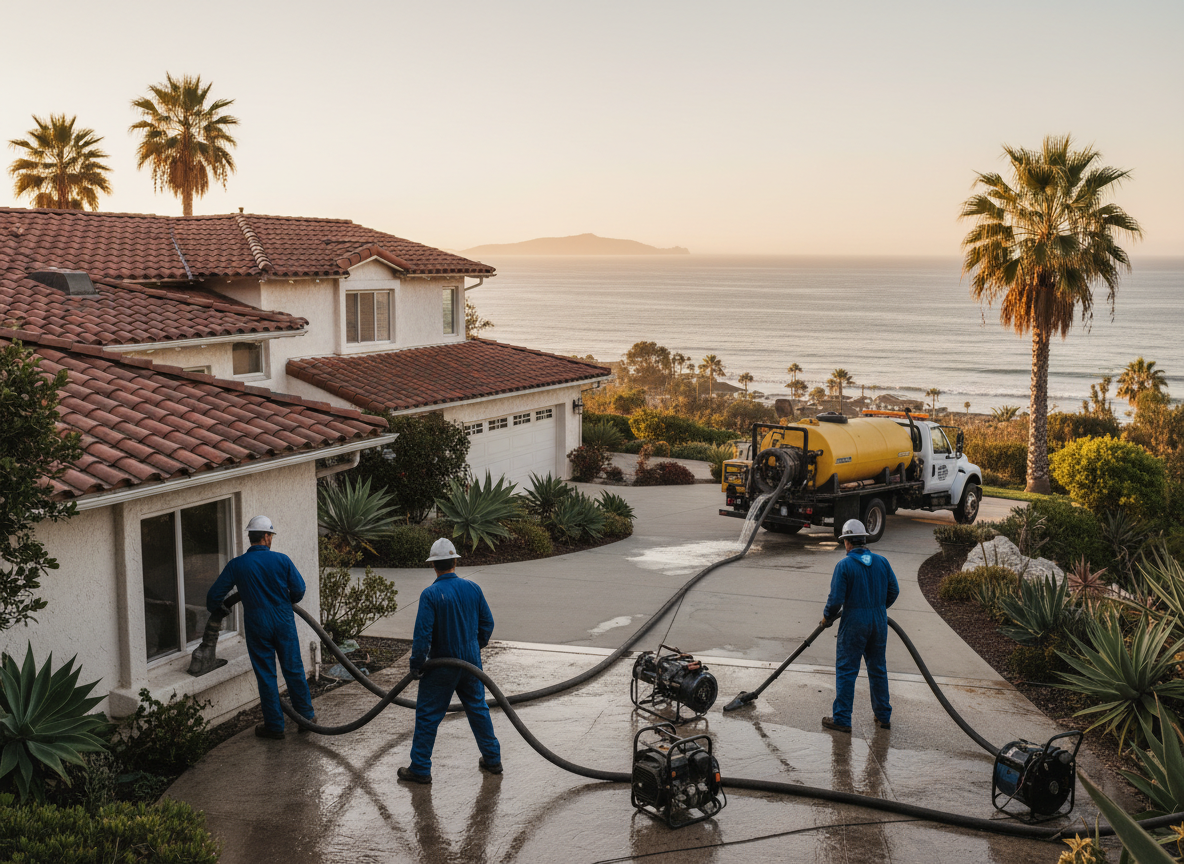
Water extraction in Rancho Palos Verdes often involves homes built on slopes near Portuguese Bend and the Rolling Hills Estates border where gravity and poor drainage push water under foundations. Crews use submersible pumps and moisture meters to pull standing water from crawl spaces and slab edges common in Los Angeles County construction from the 1960s onward. Ocean breezes keep surface humidity moderate but can mask deeper saturation in stucco walls and hardwood floors found in Seaview and Terranea-area residences.
Technicians check for hidden pockets behind kitchen cabinets or along retaining walls that border Abalone Cove Shoreline Park trails, because once water migrates into soil it travels laterally under patios. Extraction stops before mold sets in the mild Mediterranean climate, yet salt air near Point Vicente Lighthouse can corrode equipment and wiring if left wet. Every job includes documenting affected materials so homeowners in nearby Palos Verdes Estates or San Pedro can see exactly what was removed.
Edge cases include water trapped under Los Verdes Golf Course-adjacent lots where compacted fill dirt resists drying. Portable extractors with HEPA filtration protect indoor air while crews work around Terranea Resort traffic patterns that limit large equipment access. Final verification uses infrared imaging to confirm moisture levels meet industry dry standards before any reconstruction begins.
Technician insight
In Rancho Palos Verdes the thing that catches most people out with water extraction is how quickly water travels under the compacted fill on Portuguese Bend slopes; a small kitchen leak can reach the garage slab overnight because the ocean breeze masks the humidity until the baseboards start buckling.
Seaview Home Extraction After Pipe Burst
A bathroom supply line failed in a 1970s Seaview residence, sending water under the hallway slab. Extraction crews found saturation extending toward the rear retaining wall that backs up to the Rolling Hills Estates border. Submersible pumps and perimeter drying removed the water over three days without disturbing the ocean-view deck footings.
How it works
- 1
Initial Assessment
Technician arrives within hours, maps water migration through the home, and identifies affected zones near slopes or retaining walls.
- 2
Water Removal
Submersible pumps and wands extract standing water from floors, crawl spaces, and wall cavities while protecting nearby finishes.
- 3
Moisture Verification
Infrared cameras and meters confirm saturation levels in concrete, wood, and drywall before drying equipment is placed.
- 4
Site Protection and Handover
Barriers contain any remaining dust, equipment is removed, and a written summary of extracted volumes is provided to the owner.
Pricing
Upfront quotes after inspection; final cost depends on water volume, depth of saturation, and access on hillside lots.