Rancho Palos Verdes sits on coastal bluffs where mild Mediterranean air meets cooler Pacific water, creating condensation cycles inside attics that older homes in Portuguese Bend and along the Rolling Hills Estates border were never designed to handle. Many properties from the mid-century build period feature limited ridge venting and original insulation that absorbs humidity, letting mold colonies form on rafters and sheathing before homeowners notice musty odors downstairs. Water intrusion often starts from wind-driven rain at roof edges near Abalone Cove Shoreline Park or from irrigation overspray on sloped lots, then travels unseen through the attic before dripping into ceilings.
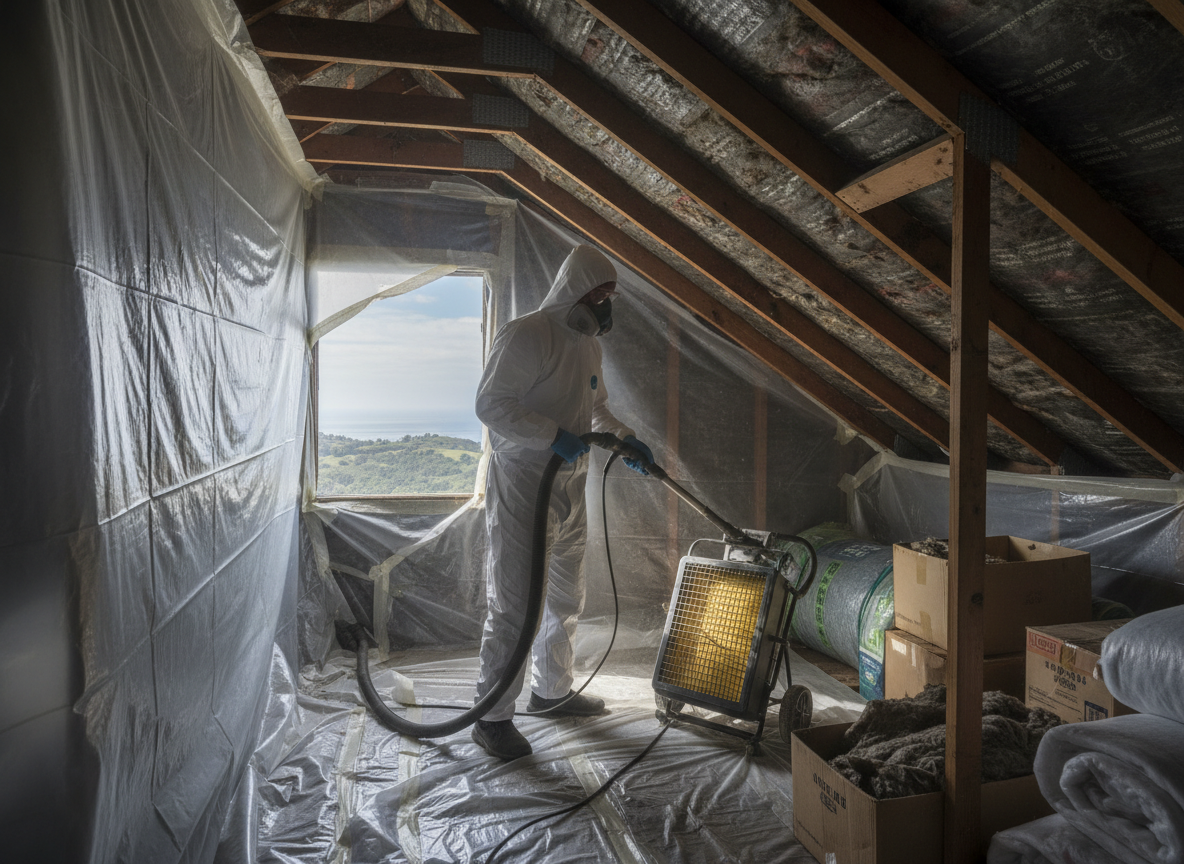
Remediation here requires isolating the attic from living areas with negative air machines while working around the steep terrain that limits equipment access on many streets near Point Vicente Lighthouse. Technicians remove affected insulation and treat wood with antimicrobial solutions rated for marine-influenced environments, then improve ventilation to match the constant ocean breeze patterns that can otherwise reintroduce moisture within weeks. Los Angeles County building codes on attic access and vapor barriers must be followed when replacing materials, especially in homes bordering San Pedro where seismic retrofits have altered roof structures and airflow.
Edge cases include mold hidden behind spray-foam insulation installed in the 2000s that now traps water against rafters in Terranea-area homes, or growth along HVAC ducts running through unconditioned attic space in Seaview neighborhoods. Skipping proper drying after any roof leak near Los Verdes Golf Course almost always leads to recurrence because the ocean-moderated temperatures slow evaporation. Homeowners in Palos Verdes Estates and Rolling Hills frequently discover the issue only after selling, when inspectors flag discoloration on ceiling joists.
Virexind Frame operates from 28625 S Western Avenue and responds 24/7 to contain growth before it spreads into wall cavities common in the area's split-level hillside construction.
Technician insight
In Rancho Palos Verdes, the thing that catches most people out with attic mold remediation is how the constant Pacific breezes push humid air into older attics along the Rolling Hills Estates border where original ridge vents were never upgraded, letting condensation form on the underside of roofs even without an obvious leak.
Hidden Growth After Roof Edge Leak
A homeowner in Portuguese Bend noticed ceiling stains after winter rains. Inspection revealed mold colonies on rafters fed by wind-driven moisture entering at the roof edge and traveling through limited venting. Crews contained the space, removed saturated insulation, treated the wood, and added targeted vents matched to local ocean airflow. The attic tested clear and the ceiling repairs held through the next season.
How it works
- 1
Initial Assessment
Technicians inspect attic spaces for moisture sources tied to local rooflines and ocean humidity, documenting affected materials without disturbing settled mold.
- 2
Containment Setup
Plastic barriers and negative air machines isolate the attic from living areas to prevent spore migration into Rancho Palos Verdes homes.
- 3
Removal and Treatment
Contaminated insulation and wood surfaces are removed or cleaned using solutions suited to marine climates, followed by HEPA vacuuming.
- 4
Drying and Ventilation Upgrade
Industrial drying equipment removes residual moisture while ventilation adjustments account for Pacific breezes common in Portuguese Bend and Terranea.
- 5
Final Clearance
Post-remediation testing confirms mold levels are controlled before restoring insulation and access points.
Pricing
Cost depends on attic size, extent of hidden growth behind insulation, and access challenges on hillside lots in Portuguese Bend or near Terranea Resort.