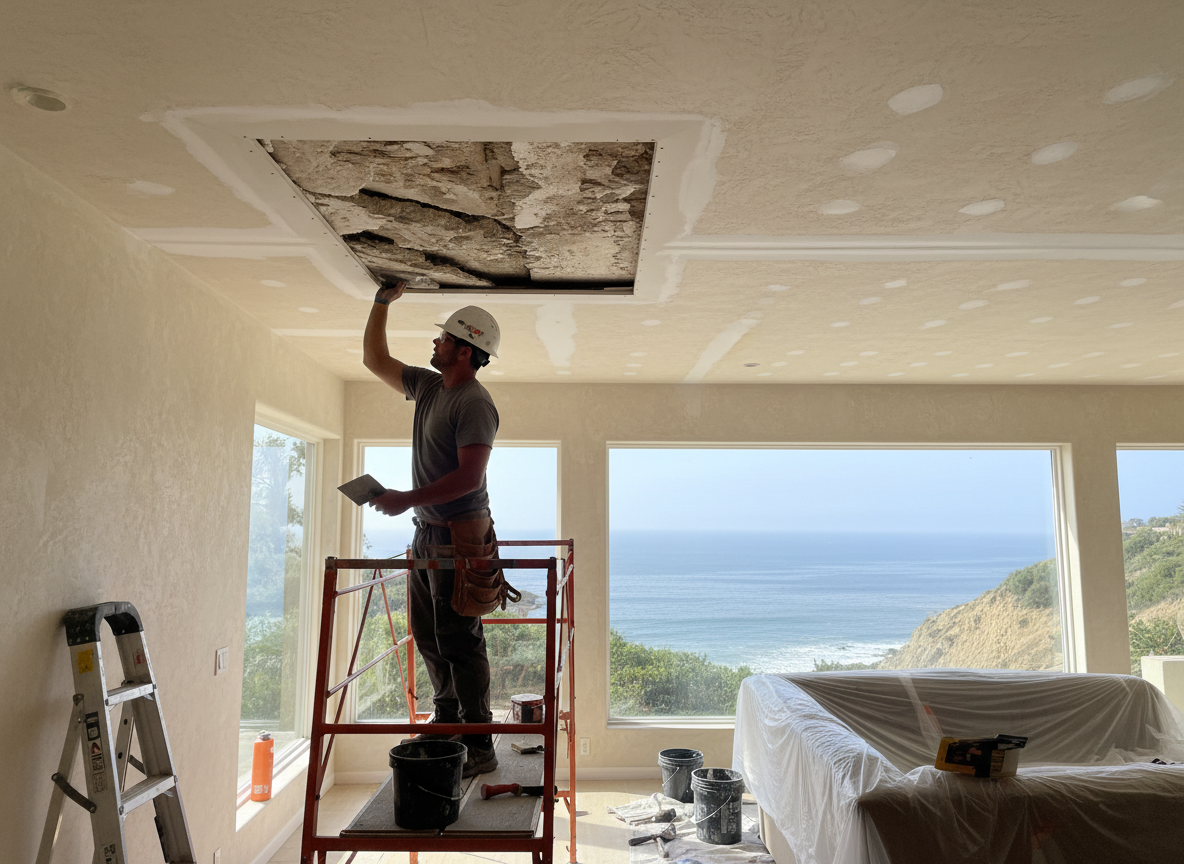
Rancho Palos Verdes homes built on hillsides near Portuguese Bend and the Rolling Hills Estates border often feature older plaster and lath ceilings that hide slow leaks from aging roof flashings. Pacific Ocean breezes keep humidity moderate most of the year, yet they can push moist air into attic spaces above Seaview and Terranea properties, allowing hidden saturation to spread along joists before visible stains appear on living room ceilings. We cut precise access openings, dry the cavity with directed airflow, and replace only the compromised section rather than entire ceilings to limit disruption in these hillside residences.
Los Angeles County building practices in the area require proper vapor barriers and ventilation when ceilings are opened near coastal zones. Water intrusion from wind-driven rain around Point Vicente Lighthouse or near Abalone Cove Shoreline Park can travel laterally under tile roofs common in Palos Verdes Estates and Rolling Hills. Our crews check for compromised insulation, treat any surface mold that develops in the enclosed space, and reinstall matching texture so repairs blend with original mid-century finishes.
San Pedro and nearby neighborhoods share similar construction, but Rancho Palos Verdes lots frequently sit on steeper grades that direct runoff toward foundation walls and into ceiling cavities above garages. We document moisture levels at multiple depths before closing the ceiling to prevent callbacks when winter rains return. Every job starts with an on-site assessment from our 28625 S Western Avenue base so homeowners receive clear next steps without surprises.
Technician insight
In Rancho Palos Verdes the thing that catches most people out with Ceiling water damage repair is how ocean breezes push moist air into the attics of 1960s Portuguese Bend homes, letting small roof leaks travel along ceiling joists for months before any stain shows on the living room side.
Hidden Leak Above Terranea Living Room
Homeowner noticed a faint brown line on the ceiling near Terranea Resort. We traced it to wind-driven rain entering under loosened tiles on the uphill roof edge. After drying the joist bay and replacing a four-foot section of plaster, the ceiling was restored with matching texture and no further moisture movement detected.
How it works
- 1
Initial Assessment
We arrive 24/7, locate the water source, and map moisture extent using meters on ceilings in Portuguese Bend and Terranea homes.
- 2
Containment and Drying
Negative air machines and dehumidifiers isolate the area while we dry joists and insulation without spreading dust through the house.
- 3
Repair and Finish
Remove damaged drywall or plaster, treat surfaces, install new material, and match texture to the existing ceiling.
- 4
Final Verification
Re-check moisture readings and confirm the original leak path is resolved before leaving the property.
Pricing
Cost depends on ceiling access, square footage affected, and whether insulation replacement is required. Upfront quotes provided after inspection.