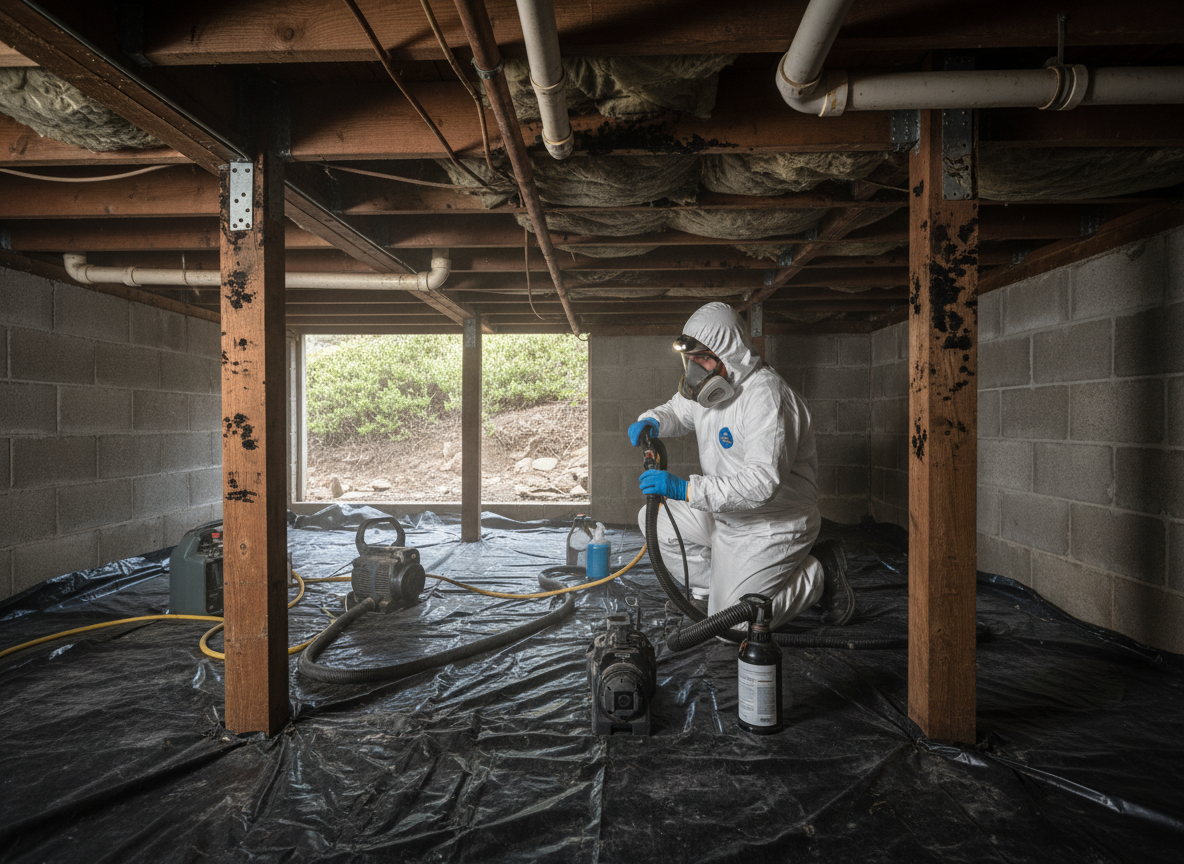
Rancho Palos Verdes homes built on coastal hillsides often have crawl spaces that trap humidity from Pacific Ocean breezes, especially in neighborhoods like Portuguese Bend and along the Rolling Hills Estates border. Older wood-framed structures common in the area allow moisture to migrate from soil and air into joists and insulation, creating conditions for mold growth that standard dehumidifiers rarely reach. Water damage restoration crews address this by isolating the space, removing affected materials, and applying antimicrobial treatments before restoring airflow.
Seaview and Terranea-area properties face additional challenges from fog and salt-laden air that accelerates corrosion on metal fasteners and promotes hidden mold behind vapor barriers. Los Angeles County building codes require proper ventilation and moisture barriers in crawl spaces, yet many homes near Abalone Cove Shoreline Park still lack updated systems. Technicians inspect for active leaks from irrigation or hillside runoff before any removal begins, preventing repeat growth that can affect indoor air quality in the living areas above.
Work near Los Verdes Golf Course and Point Vicente Lighthouse frequently involves navigating tight access points and uneven terrain that limits equipment size. Crews use negative air machines and HEPA filtration to contain spores during removal, then install vapor barriers and insulation upgrades suited to the mild Mediterranean climate. This approach handles the specific combination of ocean moderation and occasional heavy winter rains that keeps soil damp year-round in many local crawl spaces.
Seasonal Moisture Patterns
Mild ocean breezes keep temperatures moderate but maintain high relative humidity in crawl spaces through spring and fall, requiring consistent monitoring even when surface conditions appear dry.
Technician insight
In Rancho Palos Verdes, the thing that catches most people out with crawl space mold removal is how ocean breezes push constant humidity under older hillside homes near Portuguese Bend, where poor original grading lets water sit against the foundation even during the mild Mediterranean winters.
Seaview Home After Winter Rain
Water from hillside runoff entered a crawl space in a Seaview residence near Terranea Resort. Inspection found mold on joists and insulation saturated from repeated dampness. Crews contained the space, removed affected materials, treated surfaces, and installed a sealed vapor barrier. The home passed final moisture checks with no recurrence during the next rainy season.
How it works
- 1
Initial Inspection
Technicians enter the crawl space from the Rancho Palos Verdes address to map moisture sources and visible mold extent.
- 2
Containment Setup
Plastic barriers and negative air machines isolate the area to prevent spore migration into living spaces.
- 3
Material Removal
Affected insulation and wood are extracted and disposed of following Los Angeles County guidelines.
- 4
Treatment and Drying
Antimicrobial agents are applied and dehumidifiers run until moisture readings reach safe levels.
- 5
Barrier Installation
New vapor barriers and ventilation adjustments are added to limit future ocean-driven humidity.
Pricing
Upfront quotes provided after on-site inspection of the specific crawl space conditions.