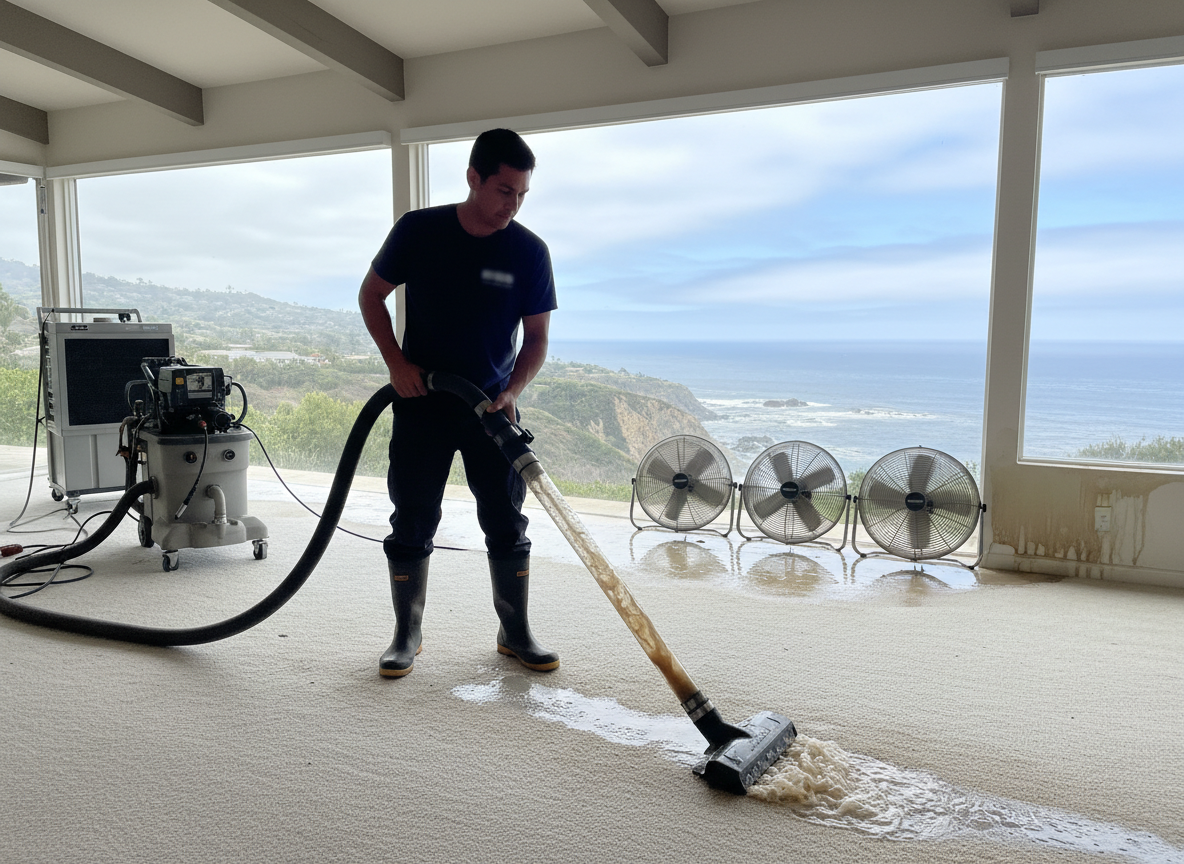
Rancho Palos Verdes sits on steep coastal bluffs where winter Pacific storms send runoff down slopes into Portuguese Bend and along the Rolling Hills Estates border. Rapid water extraction here means reaching slab foundations and crawl spaces before water pools against the clay-rich soil that holds moisture longer than the sandy coastal strips near San Pedro. Crews stage portable extractors at street level because many driveways drop sharply toward the ocean, limiting truck access and requiring longer hose runs than jobs in flatter Palos Verdes Estates neighborhoods.
Mild Mediterranean temperatures keep interior moisture high even after extraction, so crews monitor relative humidity at multiple points inside older ranch homes built on raised pads near Terranea Resort. Hidden pockets behind stucco and under Los Verdes Golf Course-adjacent patios often retain water that later feeds mold growth if not pulled within the first four hours. Equipment is sized for smaller lots typical in Seaview and Abalone Cove Shoreline Park areas where narrow side yards prevent large dehumidifier placement.
Ocean breezes accelerate surface drying yet push salt-laden air into wall cavities, raising corrosion risk on metal framing common in 1960s-1970s construction along the Terranea ridge. Extraction teams cut small inspection ports rather than broad demolition to preserve the limited structural redundancy in these hillside homes. Every job ends with a written moisture map showing readings at Point Vicente Lighthouse-area elevations versus lower San Pedro-adjacent streets so owners see exactly where follow-up drying is required.
Technician insight
In Rancho Palos Verdes, the thing that catches most people out with Rapid water extraction is how the clay soil along the Rolling Hills Estates border holds water far longer than the sandy pockets near Abalone Cove Shoreline Park, so pumps stay on site an extra day even after surface water is gone.
Portuguese Bend Hillside Runoff
Heavy overnight rain sent water down a steep driveway into a 1970s ranch home near Portuguese Bend. Crews found standing water against the rear slab and trapped moisture under the living-room subfloor. High-volume extractors and perimeter pumps cleared the water in four hours, followed by targeted drying that kept readings below 12 percent before the next storm arrived.
How it works
- 1
Arrival and Containment
Technicians park at the 28625 S Western Avenue base and reach the site within the hour, setting up containment barriers to stop water migration down the slope.
- 2
Standing Water Removal
High-volume pumps extract visible water from basements, garages, and yards while routing discharge to street drains approved for Los Angeles County coastal runoff.
- 3
Hidden Moisture Detection
Infrared scans locate trapped water behind walls and under slabs in Portuguese Bend and Seaview homes where clay soil prevents natural drainage.
- 4
Final Extraction and Documentation
Remaining moisture is pulled with subfloor tools, then a moisture map is delivered showing readings before crews leave the property.
Pricing
Upfront quotes issued after on-site inspection; final cost reflects water volume, slope access, and number of affected levels in Rancho Palos Verdes terrain.