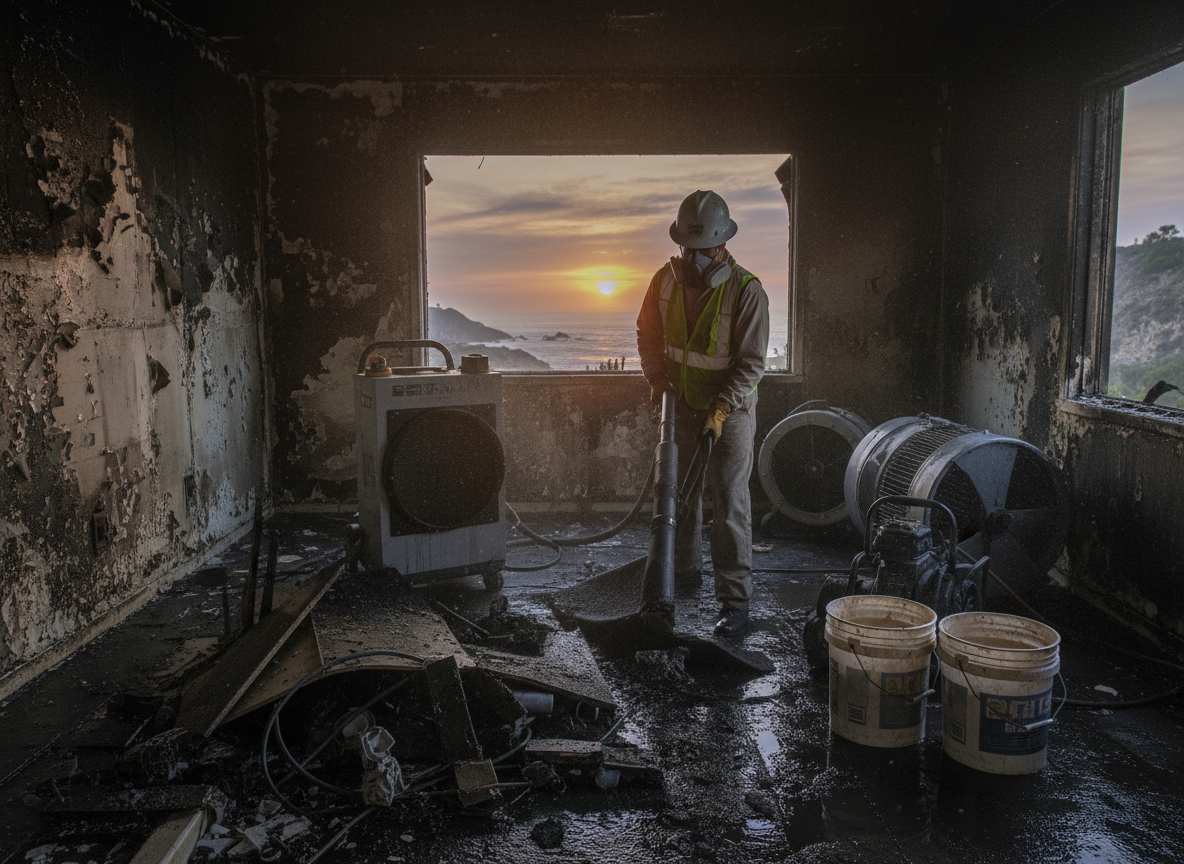
Homes in Portuguese Bend and along the Rolling Hills Estates border often feature stucco exteriors and older wood framing from mid-century builds that readily absorb water from hose lines during fire response. The mild Mediterranean climate moderated by Pacific Ocean breezes slows natural evaporation in shaded hillside pockets near Abalone Cove Shoreline Park, allowing moisture to linger behind baseboards and in subfloors. Los Angeles County requirements for post-incident documentation mean crews must map hidden saturation with infrared tools before demolition to avoid code violations during repairs.
Firefighting water frequently pools in low-lying sections near Los Verdes Golf Course or around Terranea Resort access roads where soil composition retains liquid longer than flat inland lots. Edge cases include saturated insulation in vaulted ceilings common to Seaview properties and corrosion starting in electrical boxes within 48 hours if not addressed. Technicians check for secondary issues like compromised drywall anchors on slopes where shifting soil from ocean proximity can reopen seams after initial drying.
Remediation crews extract standing water first then deploy air movers and dehumidifiers calibrated for the local humidity range, followed by antimicrobial application on affected framing to prevent growth in the moderate temperatures that persist year-round. Homeowners in Palos Verdes Estates and San Pedro sometimes overlook water that migrates through shared walls in attached garages, creating odor issues weeks later. Thorough drying logs protect against insurance disputes and ensure compliance with county inspection standards before reconstruction begins.
Technician insight
In Rancho Palos Verdes, the thing that catches most people out with water damage remediation after fire is how ocean breezes around Point Vicente Lighthouse keep surface readings low while moisture hides in the older hillside framing near Abalone Cove Shoreline Park, turning a quick dry job into mold remediation if crews skip infrared scans.
Post-Fire Water in Seaview Home
Fire hoses flooded the lower level of a mid-century home near Seaview. Infrared scans revealed trapped moisture behind stucco on the slope side. Crews extracted water, ran drying equipment for five days, and treated framing before handing over documentation for county sign-off.
How it works
- 1
Initial Assessment
Technicians arrive within hours to inspect saturation levels using moisture meters across affected rooms in Rancho Palos Verdes homes.
- 2
Water Extraction
Standing water and excess moisture are removed from floors, walls, and cavities before secondary damage sets in.
- 3
Drying and Monitoring
Industrial equipment runs continuously with daily checks until readings return to normal across Portuguese Bend and nearby neighborhoods.
- 4
Sanitization and Documentation
Antimicrobial treatment is applied and full moisture logs are prepared for Los Angeles County records.
Pricing
Upfront quotes follow on-site evaluation; final cost depends on square footage, materials affected, and drying duration required by local conditions.