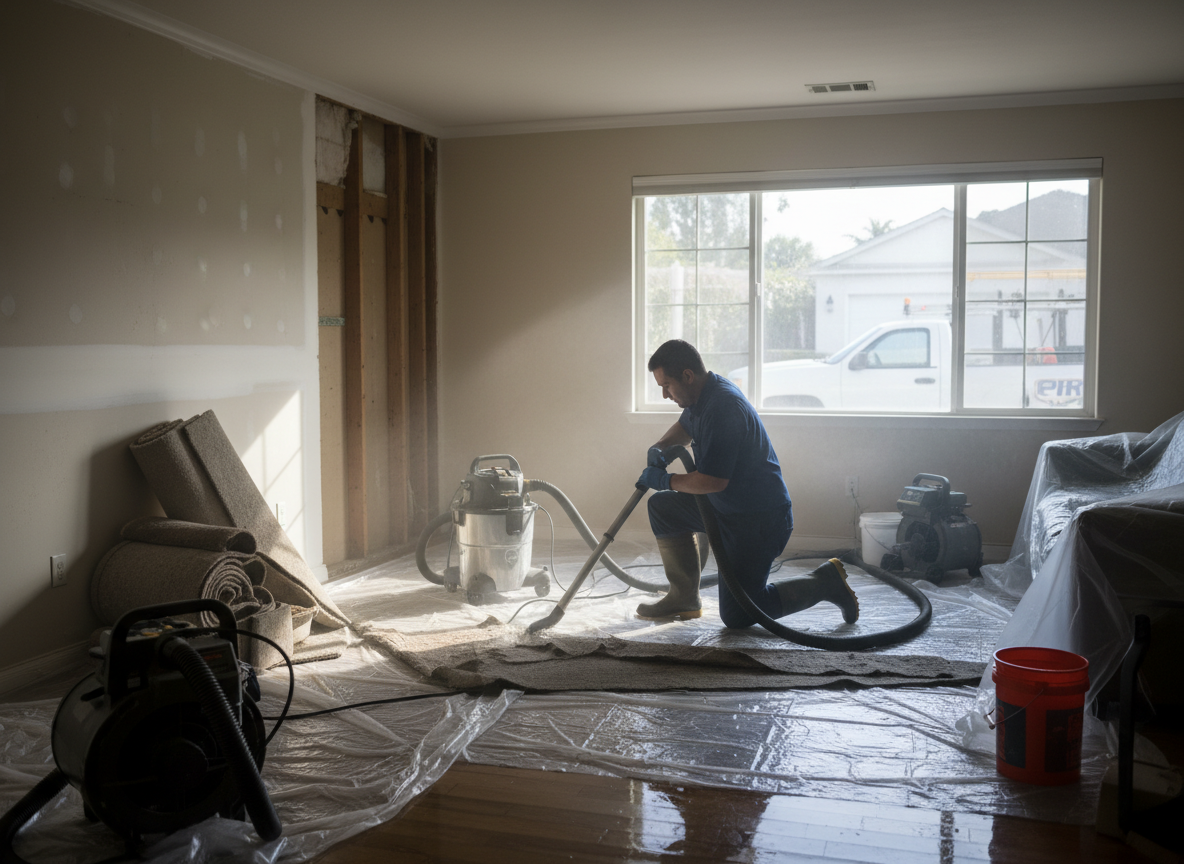
Rancho Palos Verdes sits on steep coastal slopes where mild Mediterranean weather meets Pacific breezes that often push moisture into older stucco and wood-frame homes built before modern vapor barriers. Water intrusion near Portuguese Bend or the Rolling Hills Estates border frequently travels along clay-heavy soils and enters through cracked foundations or hillside retaining walls rather than obvious roof leaks. Technicians must map hidden saturation behind lath and plaster walls common in mid-century Seaview properties while accounting for the ocean air that slows natural drying and raises mold risk in enclosed spaces.
Jobs near Terranea Resort or Abalone Cove Shoreline Park often involve salt-laden air accelerating corrosion on metal lath and plumbing lines, requiring removal of affected drywall sections down to the studs when moisture readings exceed 15 percent. Los Angeles County building codes in these zones demand proper ventilation during drying to prevent trapped humidity in crawl spaces carved into the hillside. Crews at 28625 S Western Avenue keep extraction equipment staged for rapid deployment because sudden winter rains can overwhelm the natural drainage paths that run toward Point Vicente Lighthouse.
Edge cases arise when water migrates from Los Verdes Golf Course irrigation into adjacent single-story ranches on the San Pedro side, saturating slab edges without visible surface pooling. Restoration here requires lifting sections of flooring and using moisture meters on concrete that retains water longer due to the cool ocean influence. Homeowners in Terranea frequently discover damage only after noticing musty odors in guest suites because the constant breeze masks early humidity spikes.
Technician insight
In Rancho Palos Verdes the thing that catches most people out with water damage restoration near me is how Pacific breezes keep exterior surfaces feeling dry while moisture lingers inside older lath-and-plaster walls on the Portuguese Bend side of town. Homeowners often delay calling because the mild climate masks the problem until mold appears months later.
Hidden Saturation Behind Retaining Wall
Water from heavy rain entered a Seaview home through a cracked hillside retaining wall and traveled under the slab. Inspection showed elevated readings in the subfloor extending toward the garage. Extraction and targeted drying prevented mold growth in the enclosed space, allowing the owners to resume normal use without full floor replacement.
How it works
- 1
Initial Assessment
Technicians arrive within hours and use moisture meters plus thermal imaging to trace water paths through Rancho Palos Verdes hillside construction.
- 2
Water Extraction
Portable pumps and vacuums remove standing water while protecting original hardwood and tile finishes common in Seaview homes.
- 3
Drying and Monitoring
Air movers and dehumidifiers run continuously with daily readings until materials return to pre-loss moisture levels.
- 4
Restoration and Repairs
Damaged drywall, insulation, and flooring are replaced, matching the coastal stucco and trim details typical of Portuguese Bend properties.
Pricing
Upfront quotes issued after inspection account for terrain access and material types in older coastal homes.