2026-10-24 ·
Winter Rain Risks for Hillside Homes in Rancho Palos Verdes
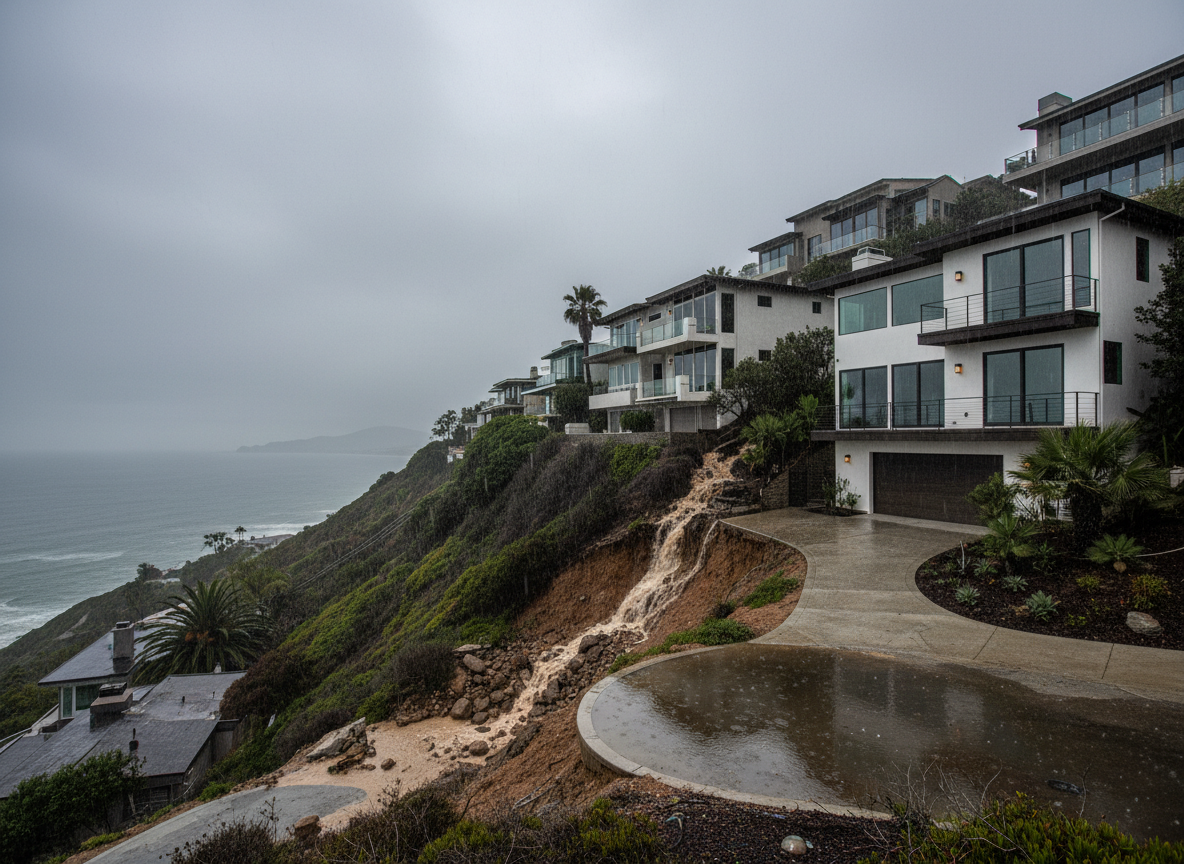
Hillside homes in Rancho Palos Verdes face a 30 to 50 percent higher chance of water intrusion and soil movement during winter rains compared to flatter neighborhoods, driven by steep grades that direct runoff toward foundations and crawl spaces.
Local Terrain and Rainfall Patterns
Rancho Palos Verdes sits in Los Angeles County with rolling hills that slope toward the Pacific. Neighborhoods such as Portuguese Bend and the Rolling Hills Estates border experience concentrated runoff because clay-heavy soils hold moisture longer than sandy coastal deposits. The mild Mediterranean climate moderated by Pacific Ocean breezes keeps most winters mild, yet occasional storms deliver 2 to 4 inches in 24 hours, enough to overwhelm older drainage systems installed when many homes were built in the 1960s and 1970s. Nearby cities including Palos Verdes Estates and Rolling Hills share similar geology, but the steeper sections near Terranea and Seaview see faster water channeling along natural swales. Landmarks such as Point Vicente Lighthouse and Abalone Cove Shoreline Park sit on exposed bluffs where wind-driven rain adds horizontal pressure to exterior walls. These patterns mean water often enters at grade changes rather than through roofs alone.
Soil Saturation and Foundation Threats
Clay soils common along the Portuguese Bend corridor expand when wet and contract during drier spells, creating hairline cracks that widen over repeated wet seasons. Homes near Los Verdes Golf Course and Seaview often rest on fill material placed decades ago, which settles unevenly once saturated. Water that pools against stem walls travels laterally into basements or crawl spaces, softening subfloor supports. In the Seaview area, coastal breezes keep surfaces damp longer, slowing evaporation and extending the window for moisture to reach framing. Residents near the Rolling Hills Estates border report visible cracks in stucco and patios after multi-day rains because surface drainage was designed for lighter seasonal totals. Monitoring soil moisture with simple probes around the perimeter helps catch early movement before it affects load-bearing elements.
Drainage Challenges Near Portuguese Bend
Steep driveways and terraced lots in Portuguese Bend direct water toward lower elevations faster than standard French drains can handle. Access and soil challenges during restoration near Portuguese Bend outlines how narrow roads and unstable slopes complicate equipment placement during wet months. Many properties here rely on original 1970s-era gutters and downspouts sized for lighter rainfall; overflows send sheets of water against siding. Ocean breezes push mist inland, adding to the load on already saturated ground. Checking cleanouts and extending downspout discharge at least 5 feet from foundations reduces the volume reaching vulnerable areas. Properties bordering San Pedro also contend with shared drainage easements that can back up when upstream lots lack proper grading.
Practical Steps for Homeowners
Inspect roof-to-wall transitions and window flashing each fall before the first heavy rain. Clear debris from scuppers and area drains around Terranea Resort-adjacent homes where eucalyptus leaves accumulate quickly. Grade soil to slope away from the house at a minimum of 6 inches over 10 feet. In crawl spaces, verify that vapor barriers remain intact and that any existing sump pumps cycle during test runs. For older homes in Miraleste or Eastview, consider adding French drains along the uphill side before winter arrives. When saturation signs appear, such as musty odors or sticking doors, prompt evaluation prevents minor issues from reaching framing. Water damage mitigation addresses these conditions before mold colonies establish in hidden cavities.
When Professional Assessment Becomes Necessary
Persistent dampness after 48 hours of dry weather or visible efflorescence on foundation walls signals the need for extraction and drying equipment. What Rancho Palos Verdes residents should do after a plumbing leak provides additional guidance on tracing hidden sources that winter rains can expose. Technicians familiar with Los Angeles County hillside construction understand how to stage equipment on narrow pads without triggering further soil movement. Early intervention limits damage to insulation and subfloors that would otherwise require full replacement after prolonged exposure.